Showing posts with label Musical. Show all posts

Tuesday, January 26, 2016

Burns and Mozart: a January celebration!

Let's not let January go by without giving a nod to Robert Burns and Wolfgang Mozart. On January 25, 1759 the great Robert Burns was born, and on January 27, 1752, Mozart entered this world. Two creative geniuses: one literary, the other musical.
And, the world of fine arts would never have been the same without them.

Burns, a Scotsman, was a poet and lyricist, regarded as the national poet of Scotland, writing over 500 poems!
Wolfgang, our famous German composer, wrote, in various forms, including symphonies, concerti, sonatas, church music, operas, dances, marches, over 600 works.

Over the years, the celebration of Burns birthday has become a bit of a thing of its own. Known as the Burns Supper, there is the piping in of the guests, the host's welcome speech, the Selkirk Grace prayer, the soup course, haggis course (which receives its own piping in), the main course, toasts and more toasts, an address to the lassies present, a reply to the laddies present, and the hearing of some of Burns' work.  Wow!


Poor Wolfgang only receives our thanks individually, if someone choses to remember. I, for once, choose to make an evening of it with my friends, having German food, and a Sacher torte for dessert, though this year we are combining the two "events" and including a Scotch tasting. I think Wolfgang would have approved of this.

Tuesday, January 12, 2016

The Eyes have It!

January 10 marked the death of David Bowie, famous musician/performer. He was 69, and was really was the first to explore music, particularly rock music, as performance art, and hence "glam rock" was born. He sang, played guitar and composed some very catchy tunes over his 40 year career, but it was his unique and rather otherworldly quality to his voice and appearance that set him apart. He was truly one of a kind. Regarding his appearance, he donned outlandish and even futuristic type clothing which he changed like a chameleon over the span of his popularity, but there was also something about his physical appearance that gave him an "alien-like" quality. Yes, he was thin, tall and pale, but it was his eyes that were mystical and magical. They appeared to be of two different colors, one blue, one brown or at least very dark. But that was not it. He had a condition as a result of an injury, called anisocoria, that resulted in a difference in the size of his pupils.


Historically, Around 200 AD, Galen likened the iris to an elastic circular ring that was passively inflated or deflated by vital spirits sent from the brain to enhance vision. It was not until the first half of the 18th century that it became widely accepted that iris movement and pupil size were due to active interaction of 2 iris muscles: a longitudinal radial dilator and a circular sphincter muscle.

Unusual physical traits have always been fascinating. Some are repulsive, but some are mesmorizing, like Bowie's eyes. Eyes, as they say, are the windows to the soul, and anything odd or different about them can create suspicion, adoration, or obsession, or a definition of beauty depending on the era.

In the 18th Century, the women of Georgian high society looked beautiful in their satins and silks, but they hardly ever bathed.  Sanitation was still quite crude and they preferred to douse their clothes, their bodies and their belongings in toilet waters and perfumes. They wore scented pomanders and carried small scent bottles about their person.  They had false teeth, false hair, false bosoms, false calves and induced large eyes which they made to falsely dilate by using Belladonna extracted from the Deadly Nightshade plant.  They were a walking deception.By the way, from Latin, bella donna means 'fair lady', perhaps from the use of its juice to add brilliance to the eyes by dilating the pupils.

Wednesday, November 18, 2015

Marchons! Marchons!

France's national anthem, La Marseillaise, is one of the most captivating and defiant of all anthems.

In 1792 Claude-Joseph Rouget de Lisle, captain in the French army, composed it, after Austrian and Prussian troops invaded France, hoping to stop the revolution. The mayor of Strasbourg asked Rouget to write something that would rally the troops who were under threat. It was originally titled "Chant de guerre pour l'Armee du Rhin", and it was dedicated to Marshal Nicholas Luckner, the army's Bavarian commander.

The lyrics stated that the children of the Fatherland's day of glory has arrived, but there was also a terrible warning, that "ferocious soldiers" were coming under the "Bloody banner" of tyranny to "cut the throats of your sons, your women". Citizens were to take up arms and "Marchons! Marchons"  (let's march on !)

Sung by troops from Marseilles as they approached Paris, this is how it got its nickname. It became the French anthem in 1795, but lost its status when Napoleon I reigned.

La Marseillaise was restored again during France's third republic - from 1870 when the modern idea of what France means was established. Unlike Britian's "God Save the Queen", it is not aristocratic, but about the people, about being a citizen.
And, so, here is the song, and a translation!

Allons enfants de la Patrie, (Arise, children of the Fatherland)
Le jour de gloire est arrive! (The day of glory has arrived!)
Contre nous de la tyrannie, (Against us tyranny's)
L'etendard sanglant est leve (repeat) (Bloody banner is raised)
Entendez-vous dans les campagnes (Do you hear, in the countryside)
Mugir ces feroces soldats? (The roar of those ferocious soldiers?)
Ils viennent jusque dans vos bras (They're coming right into your arms)
Egorger vos fils, vos compagnes! (To cut the throats of your sons, your women!)
Chorus: Aux armes, citoyens, (To arms, citizens)
Formez vos bataillons, (Form your battalions)
Marchons, marchons, (Let's march, let's march)
Qu'un sang impur (Let an impure blood)
Abreuve nos sillons (repeat) (Water our furrows)

And, if you want to see a great rendition, watch it performed at Rick's in the film Casablanca! 
https://www.youtube.com/watch?v=HM-E2H1ChJM


Monday, October 26, 2015

Remembering Wolfgang

It has been awhile since I have written about Wolfgang Mozart, but recently I watched a wonderful BBC documentary on his life and works, and heard one piece in particular that made me want to go through my collection of CD's and bring Wolfgang back into the car with me, to listen to him "speak" as it were, as we drive along. I have not enjoyed that for a bit. And I say "speak", because he does speak to us through his music. We hear him jubilant or care-worn, lighthearted or serious. We understand his social and political views through his operas. We see how devoted he was through his spiritual religious works. Of course, we know that at the heights of his despair, he could write as if he was at a festive party. He really is a miracle, writing over 600 pieces of work that really define the Classical era, as well as being as relevant and fresh today as they day they came off his work table.

The piece that just grabbed me is the Piano Concerto No. 23 in A major (K.488). Written on March 2, 1786, it is a mature work. Mozart was 34. He had encountered a good deal of life, personally and professionally, and this work, especially the second movement, the Adagio (sometimes called the Andante), has tremendous depth and longing. It is written in F-sharp minor, 6/8 time. It is the only work he wrote in that key. That same year, around that same time, he premiered Marriage of Figaro. This concerto, though, was on of three subscription concerts that Spring, and Mozart probably also played in it as well as conducted. The concerto is scored for piano solo and an orchestra consisting of one flute, two clarinets, two bassoons, two horns and strings. 

Give this beautiful adagio a listen: https://www.youtube.com/watch?v=mf711o8jAQA

Little did he know, that he would live only 6 years more. Sometimes I liken Wolfgang to a magnificent flame, burning extremely bright and white hot, and then all of a sudden, gone. But instead of being silenced, his incredible creation lives on as we listen to his work, and cannot deny that it touches our soul.
  

Thursday, April 9, 2015

A Glorious Work of Musical Art!

With Orthodox Easter (or Pascha, as it is better known) on its way, I like to listen to some religious music as I drive along.
I do have some Byzantine chant discs to play, but I am hearing these lovely and moving hymns in church each evening. So, by day, I turn to the glorious liturgical works of Wolfgang Mozart! Today I have his Great Mass in C minor in the car, and it is so beautiful! Cataloged as K427/417a, it was composed in Vienna in 1782-83, when he was no longer the church musician of the Salzburg Cathedral. The work, formally called a missa solemnis (solemn mass) that is sung in Latin, for two sopranos, a tenor and a bass, double chorus and a large orchestra.
 
In a letter to Leopold, his father, Wolfgang wrote that he vowed to write a mass when he brought his wife Constanze to Salzburg. She sang the "Et incarnates est" (He was made flesh) at the premier.The first performance took place on October 26,1783, which included the Kyrie, Gloria and Sanctus portions.

Give it a listen, and I think you will agree that you are transported!

http://www.bing.com/videos/search?q=mass+in+c+youtube&qpvt=mass+in+c+you+tube&FORM=VDRE#view=detail&mid=51F629B200BDE37A576751F629B200BDE37A5767

Monday, March 23, 2015

A Delightful Afternoon

I had the opportunity last weekend to go to the opera with friends. We saw The Marriage of Figaro, which is a delight! It was a university performance in a small, intimate theatre setting, which in a way, made it all the more enjoyable. We sat close enough to see the actors' expressions. They were having a ball! AND, so were we and the audience. It was a joyful afternoon.

There is something about Mozart's operas....the music, of course, is beautiful. No one can argue about that. But, there is something more. He chose stories about people; the human condition, with all its flaws, its emotions, the daily ritual of living. And, there is no pretense. The story of Figaro could be set in any time frame, and it has been performed as such. Love, jealousy, insecurity, despair, flirtation, passion, forgiveness...timeless themes.

The production is an opera buffa, or comic opera, conceived from a play by Pierre Beaumarchais, written in 1784. Mozart brought Figaro to the stage in 1786, without the real blessing of the Holy Roman Emperor/German King Joseph II. The play was banned in Vienna, because of its licentiousness, but Mozart's librettist managed to get an official approval for an operatic version, and it was a great success.

There is an exchange in in Amadeus that really hits the nail on the head. Up until now, operas were concerned with lofty themes, gods and legends in otherworldly settings. In trying to persuade the Emperor to let him go ahead with Figaro, Mozart exclaims, "Which one of you would rather listen to your hairdresser than Hercules, or Horatius or Orpheus. People so lofty, they sound as if they shit marble."

The point? The point is that we really want to see real life performed, and we in turn can choose the character we relate to.And that is the bottom line of Figaro! We see ourselves, we see our struggles, our joys, our passions, all played out before us.

One of our troupe of opera-goers yesterday, had never been to the opera. When we left, she remarked that she had a wonderful time! What better opera to start with than Figaro! It is funny, witty; there are scenes of deep emotion; there is a happy ending!
Yay!!!

Friday, February 6, 2015

Cause of Death?!

Recently I had the opportunity to read the play Amadeus by Peter Shaffer. It's been awhile since I sat down with this particular book, but I was waiting for a delayed plane, and so I could read, uninterrupted, for awhile.
It's good theatre, and it ends, of course as we know, with Salieri attempting suicide in a last attempt to be remembered, confessing that he murdered the musical genius, his rival, Mozart. The play won the Tony Award for Best Play in 1981.

Though Shaffer demonstrated a good deal of artistic license about Mozart and Salieri's lives as well as the musician's death, one thing is clear. Mozart did die, all of 35 years of age, and we really don't have a clear picture of what happened to him. There are not detailed records, and so it allows for a lot of conjecture.

Mozart had health issues throughout his life. He had smallpox, tonsillitis, bronchitis, pneumonia, typhoid, rheumatic fever and gum disease. Wow! We know, because he wrote extensive letters.

His sister-in-law said he died because of malpractice by his doctor, Dr. Closset. She wrote this in 1825.
In a medical journal, in 1908, the cause was attributed to Vitamin D deficiency. He was also thought to have taken medicines containing antimony to reduce fever. Here's some quackery going on!
In 1994, Neurology Magazine suggests he died of subdural hematoma. A skull believed to be his indicates some fractures from falls that he experienced in his last years, headaches and fainting spells. Bloodletting didn't help the situation.
In 2009, British and Viennese researchers concluded he died of streptococcal infection, leading to kidney failure and its effects.  

Of course, his body was never found (the skull thing is dubious), as he was put in a common grave with other poor folk, so there could never be a proper autopsy. Nevertheless, the his loss is profound. The play is worth the read, even it is mostly fiction. It's quite entertaining. Too bad it's not currently in any theatre. The great Paul Scoffield played Salieri on the London stage. it would have been wonderful to see him in the role. 

Tuesday, January 27, 2015

HB, Wolfgang!

I remember when it all started! The love affair with Wolfgang, or more accurately, the love affair with his music.

It was actually quite a long time ago. I, of course, was always familiar with his most popular works, heard on the radio or in commercials on the television, etc. i.e. Eine Kleine Nachtmusik.

I was on a day trip with my husband, out to the high desert in California. He was to take a look at some land with some colleagues. He was a builder, and it was a Summer day, and hot. I was none-to-pleased to be using my Saturday in this way, but went along to be friendly. I chose to sit in the air-conditioned car, while the guys trudged around the dusty land. I turned on the radio, and was dialing around, when I landed on some beautiful music, and chose to listen. I was transfixed! It was the Sinfonia Concertante K364. I also was transported! The music was complex, sublime, soothing yet challenging. I loved it.

And so, I continued to explore Mozart's music, first the symphonies, then the concertos, getting into his operas and choral works. The list of his musical genres goes on and on - over 600 pieces of work to investigate! And then there are his letters which support his composition, his joys, trials, travels, relationships. Some are quite humorous, some filled with frustration, longing, all the humanity we can relate to. I celebrate in one way or another each year, sometimes with a purchase of another cd, sometimes with a book, or DVD on his life. Sometimes it calls for German food! But January 27th has become over the years a day to celebrate!

Happy birthday, my friend! Only 259 years old! Congrats!


Tuesday, January 20, 2015

Mozart and the Movies!

We are well into January, and next week we will celebrate the 259th birthday of Wolfgang Amadeus Mozart! He was born on January 27th, at 9 Getreidegasse in Salzburg, Austria. Viewed as a normal everyday child, until about age 4-5, he began to show a tremendous affinity for music. In a very short time, his father Leopold who was a musician and composer, recognized that he had a musical genius on his hands. Leopold gave up his work to be full time tutor, mentor and booking agent to his son. And, the rest is history. Very soon, the son's abilities far outstripped anything his family or those in musical circles could fathom. Wolfgang has over 600 works of various genre - sonatas, symphonies, concertos, church music, ballets, operas for a myriad of instruments - to his name.

So, I was thinking: If Wolfgang lived today, I'm sure we would, among all his music compositions, include soundtracks! Now there is a form that did not exist at that time! And so, what type of movies would he write for? Off the top, I think he probably would write for any assignment that came along, as he did when he was living. Financially, he could not afford to be so very choosy and pass anything up. But, idealistically, I think he would gravitate towards the sweeping epic. Music like John Williams' (Schindler's List, Indiana Jones and the Last Crusade, Star Wars); or Nicholas Hooper (Harry Potter and the Half Blood Prince); or Maurice Jarre (Dr. Zhivago, Lawrence of Arabia); Hans Zimmer (Gladiator); Ennio Morricone (The Mission). The list of the greats goes on and on. I haven't scratched the surface, only to point out a couple favorites of mine.


He might have embarked on a mini-series, if grand enough, and so I include HBO's Band of Brothers (Michael Kamen)


Of course, I love the soundtrack from Master and Commander, but Mozart's music is featured prominently! And in the movie Amadeus, the music, frankly, is included like one of the principal characters.  I guess Wolfie would be proud!

Thursday, December 18, 2014

A Dark and Stormy Day

With all the activity of this December, including a hectic work week with business deadlines looming December 31st, entertaining with friends and family, Shopping, cooking, and the recent difficult diagnosis of health issues for my Kitty, I forgot to blog about one of my favorite subjects....Mozart.

Of course, as you may well know, Mozart died in December after a prolonged illness complicated by renal failure. It is on his sick bed that he wrote the Requiem mass. There is controversy about how much he wrote, and how much his colleague Sussmeyer penned, but none-the-less, the signature sound of Wolfgang is there.

He died on 5 December 1791 at the age of 35. It is said that the night he died, there cropped up a winter storm.
In a  memoir attributed to one Joseph Deiner, who was claimed to have been present, the following account appeared in the Vienna Morgen-Post of 28 January 1856.
The night of Mozart's death was dark and stormy; at the funeral, too, it began to rage and storm. Rain and snow fell at the same time, as if Nature wanted to shew her anger with the great composer's contemporaries, who had turned out extremely sparsely for his burial. Only a few friends and three women accompanied the corpse. Mozart's wife was not present. These few people with their umbrellas stood round the bier, which then taken via the Grosse Schullerstrasse to the St. Marx Cemetery. As the storm grew ever more violent, even these few friends determined to turn back at the Stuben Gate, and they betook themselves to the "Silver Snake". Deiner, the landlord, was also present for the funeral.

I would like to think that at the Silver Snake. probably a tavern, those who attended raised a glass, to the great composer. Those who did not care to pay their respects can now feel themselves ashamed (wherever they are, perhaps sitting on a little dark cloud in a corner of heaven, or toasting their buns below ) as Mozart is surely and enduringly remembered! 

Wednesday, July 9, 2014

Boom!

The other day, we talked about the Independence Day, and I made mention of enjoying the perennial fireworks display.

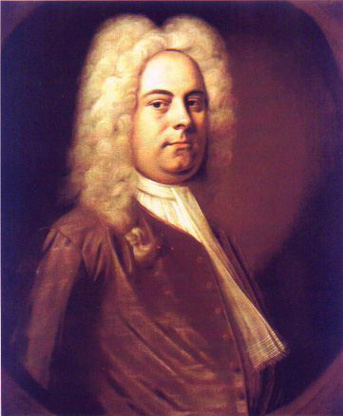
Well, today, I look into the Music for the Royal Fireworks, a wind suite composed by George Frideric Handel in 1749. Contracted by King George II of Great Britian, it accompanied a fireworks display in London's Green Park on April 27th, to celebrate the end of the War of the Austrian Succession. The Treaty to end hostilities was signed in Aix-la-Chapelle in 1748.
The musicians performed in a special building constructed for the event by Servandoni, a theatre set designer. The fireworks were designed by Thomas Desguliers, son of a cleric/scientist. Though the fireworks display was not particularly successful, the music was extremely well-received.  The music had also been performed earlier as a full rehearsal in Vauxhall Gardens, with over 12,000 people turning out to take part, causing a tremendous, three-hour traffic jam of carriages. Sounds like one of today's concerts at the O2 Arena in London, or the MGM Grand Garden arena on the Las Vegas Strip.

Composed with five movements, the suite includes:
The Overture with adagio, allegro, lentement and allegro
the Bourree
the La Paix largo alla siciliana
The Rejouissance allegro
Menuets I and II

The instuments involved include 24 oboes, 12 bassoons, a contrabassoon, nine natural trumpets, nine natural horns, three pairs of kettledrums and side drums. The combination is most impressive, and remains one of classical music's best remembered pieces. Everybody loves the Fireworks music.
By the way, fireworks, or pyrotechnics, have a long history, beginning in China in the 7th Century. Over time, they have excited and delighted for cultural or religious celebrations. In the 17th Century, with the popularity of chinoiserie in Europe (the fascination of all things Oriental/Chinese), fireworks gained popularity, too, for special occasions. By Handel's time, the moment was right for a major spectacle and a major work, commissioned by the King, to be seen and heard by enthusiastic Londoners.


Wednesday, February 12, 2014

The "Beautiful"

Once in a while, I like to listen to Country music, take a break from classical, drive along with the cowboys, their rough and tumble life of babes and bars and cars. But it only lasts awhile, and then I want my fix of the enduring, "the Beautiful" as I like to imagine it.


And so it was today. Driving along with country in the car, I said, enough, the songs start to sound all the same, as so I tuned in to my local classical public music station, and ahhhh!!! There it was, "the Beautiful" in all its splendor. I knew the tune immediately, Eine kleine Nachtmusik, the Mozart Serenade No. 13 for strings, a chamber ensemble in G major, K525. Composed in 1787, it is one of the most familiar and probably overplayed of Wolfgang's music, but it is special none-the-less.


Mozart was writing Don Giovanni at the time, and took a little break to write a trifle, as it were, something light-hearted, and so we are gifted with Nachtmusik. Though the accurate translation is "a little serenade", we all know it as "a little night music". And that's ok too! As long as it is enjoyed, perhaps along with a cocktail on a Summer's balmy evening!


Give it a listen sometime! Here's a nice version with pretty Salzburg in the background:
http://www.bing.com/videos/search?q=eine+kleine+nachtmusik+youtube&qpvt=eine+kleine+nachtmusik+youtube&FORM=VDRE#view=detail&mid=6E4E5BA4DA0C0CCFF4F36E4E5BA4DA0C0CCFF4F3


Friday, December 27, 2013

A Thought for New Years!

Well, here we are at year end! 2013 has passed so very fast, and I have enjoyed researching and bringing "new" 18th Century finds to you. As the year comes to a close, I remember Scottish poet Robert Burns' Auld Lang Syne. The song literally means "old long ago", and speaks of love and kindness of days gone by, and yet it also gives us a sense of fellowship to bring into the new year.
I leave you with a video that I think says it all as we celebrate 2014!
With love and happiness!

http://www.youtube.com/watch?v=VhiF-PD4E_c


Friday, October 11, 2013

A New Find

I get up very early each morning so that I have some time to think about the day, reflect, plan, work on a project before the day gets cranked up. I like to put on my local classical streaming TV music station while I have that first glorious cup of java. I don't want the music too loud, just enough to hear something lovely to start my morning.

Today, I heard something that made my ears prick up. I went over to the set to see whose work was highlighted. Gallupi - Flute Concerto in D. I like to play a little game, and see if I can tell whose music is on, what era it's from. I thought I heard some Vivaldi in there; perhaps some Handel or Bach. Something a bit earlier than Mozart or his contemporaries. Something a little "Italianate" perhaps.


When I saw the name Gallupi, I had to look him up. Ahh! Italian - early 1700's. Born in the island of Burano, near Venice, Baldassare Galuppi lived from 1706 - 1785, He became an international success, spending time in London and St. Petersburg as well as the Venetian Republic. He became famous in Europe for his operas, eventually earning the title of "father of the comic opera". He held official posts, most notably the head of music at the Doge's chapel, St. Mark's Basilica, in the famous square of the same name. He composed a great deal of church music, and he was a virtuoso keyboard performer.

Gallupi was a nice find this morning! Someone new to listen to.


Wednesday, October 9, 2013

Halloween Tunes

It's October, and Halloween is generally in my thoughts. I love the on-set of the Fall.     I have taken down my Summer door wreath, in favor of one with all the autumnal colors. Later in the month, I will exchange that for a more ghoulish one.

As is fitting this time of year, I get out the appropriate music to drive along with. Years and years ago, my daughter and I bought a compilation CD of Halloween-inspired tunes, "The Fright Night Classics", including Night on Bald Mountain, Swan Lake theme (remember Dracula?), Danse Macabre, March of the Gallows, the Witches Sabbath. I love to hear all the music, not only to get in the spirit of the season, but it's nostalgic of making Halloween costumes, carving pumpkins, collecting candy with my daughter.

I also like to hear some of Nightwish's rather Gothic selections, as well as another compilation "After Dark", more Cult and Bauhaus-type selections. "Bela Lagosi's Dead" and "Lucretia My Reflection" are particular favorites.

But this year, I decided to include Mozart's Requiem. Written in 1791, this Mass in D Minor is famous for some "mystery" that surrounds it. Actually, it's just that he wrote it on his death bed, and it was left unfinished, for his fellow composer, Xaver Sussmayr, to complete it. Of course, he followed the sketches Mozart had fleshed out, delivering a glorious work to Count Franz von Walsegg, who had anonymously commissioned it to commemorate the death of his wife. As Mozart was only paid a deposit on the work, his wife Constanze was quick to get it published! Thank you, Stanzie, for that!

Typically, the requiem is a mass to celebrate the souls of the dead, in a Latin format, the Roman Missal, organized as follows: The Introit, Kyrie Eleison, Gradual, Tract, Dies Irae, Offertory, Sanctus, Agnus Dei, Communion, Pie Jesu, Libera Me, and finally the In Paradisum.

Mozart's work is scored for horns, bassoons, trumpets, trombones, timpani, violins, viola, cello and organ. The vocal parts include soprano, contralto, tenor, bass as well as a full choir. It's basically the full-nine-yards!

By the time you take the journey through all the sections, you have traveled from the petition of prayers for mercy, a look at Judgment and Hell, to the to the soul's arrival in Paradise (assuming the Powers-That-Be deem the particular soul in question worthy!).

Give it a listen this season. I'm sure you will be uplifted by its beauty, and you can think that it is one of the prettier things about the Halloween season.


Wednesday, August 21, 2013

Mozart on Tour: A lighthearted moment


Every morning on my way to work, I have a chance to listen to some beautiful music. Sometimes it is my own selection, but most often I ride along with our local public station, KNPR. This morning, I was listening to Mozart, a symphony, an earlier work. Generally, I know my Mozart, and can mentally follow along with the music, but sometimes, I think it might be his work, but I’m not sure. And just when I say to myself, no, this is not Wolfgang, the announcer comes on and says, “That was Mozart’s Symphony 24 in B flat major!”
Ah! I’ve been fooled! I suppose it’s because each composer over time develops his sound! In their earlier works, they are laying down riffs, patterns, chords, sequences that begin to work for them. In later works, they count on some of these to express the mood, to round out the story. A indelible signature, like a painter’s brush strokes…Van Gogh’s squiggly lines, Hieronymous Bosch’s tight detail, Picasso’s geometry, a Turner sky.
Today, by the way, Mozart was in Bologna, in 1770, with his father. In a letter from his father Leopold  to his mother Anna Maria, Wolfgang writes a postscript that is kind of fun. He was a tourist, like any other, enjoying the different things around him, giving his impressions of people he met along the way.  I'm glad he was having a good time. Most often, when he was traveling, he was working, on tour, trying to get a commission. He was 14 at the time, and writes,
I too am still in the land of the living and, what`s more, having lots of fun. Today I was suddenly seized by the desire to ride on a donkey, as is the custom in Italy, and so I thought I should give it a try. We have the honor of going everywhere with a certain Dominican who`s regarded as a saint, though I don`t really believe it as he often has a cup of drinking chocolate for breakfast and immediately afterwards a good glass of fortified Spanish wine, and I too have had the honor of dining with this saint, who at table drank lots of wine, finishing it all off with a whole glass of fortified wine, two large slices of melon, some peaches, pears, 5 cups of coffee, a whole plate of birds and two full plates of milk and lemon; he may have done this on purpose, but I don`t think so, as it would have been too much, apart from which he also eats a lot for his tea during the afternoon. Addio. Farewell: kiss Mama's hands for me. Best wishes to all who know me.


Monday, August 12, 2013

Expiration Date: Gone too soon?

This week, on August 16, will mark the death of Elvis Aaron Presley, king of rock and roll, or better known as The King!

Whether you particularly liked his style of music, one has to admit, he was an incredible showman. The other night, I watched his famous 1975 Aloha Concert in Hawaii. He was at the height of his popularity, with white bell-bottom suit, the mutton chop sideburns, the enormous diamond rings, and the tremendous charisma, all there on display. It was quite something to take in.

Unlike the mega stars of this day, who feel the need to incorporate everything but the kitchen sin into their concert, Elvis was there on the stage alone with his band. That's all....no acrobats swinging from the ceiling, no lighting effects or jumbotron screens with close ups. Just him, in all his glory.

We sentimentalize Elvis, like we do some others that we feel left us all to soon. Sometimes it is because of over-indulgence, sometimes illness, sometimes just the luck of the draw, like Stevie Ray Vaughn, killed in a plane crash at the time he was resurrected from drug addiction, and at his very best. Elvis lived to 42 years of age, and like a comet, soared through this life, and then was gone (not to say how many Elvis sightings there have been ever since). Ha ha


It got me to thinking about Mozart, and his exceptional talent and how he, too, was a star hurtling through this world, to the next, immortalized forever through his music. He lived from 1756 - 1792. 36 years in all.
Every time I hear someone say, he died too soon, I pause. What constitutes a full life? Are we just wanting more, or is their purpose served? Would they have continued to create past their expiration date, or was this their perfect moment to depart?

Friday, May 31, 2013

No stopping a good thing.............................


Recently I received a gift of music from a friend who knows how much I like the Blues. The CD is Stevie Ray Vaughn’s Blues at Sunrise, and filled with some great tracks. Why does the music move me so? It’s simple really…..the music is just that, SIMPLE, and in its simplicity, it is emotional. Of course, the words of a great blues song speak to universal themes of sadness, betrayal, back-breaking work, revenge, love, joy. But the rhythms are what grab you. The pulse so near a heart-beat, so primeval. It’s instinctive. You just gotta love the blues.

Looking back, I find that the blues has its roots, of course, in the work songs of the African slaves. The Blues is American music, but it came over on the slave ships. Its melodies soothed when folks felt down, expressed joy at simple pleasures, raised hands to the Heavens to praise the Lord. Jazz, the quintessential American music, has its roots in the Blues, made more sophisticated through the use of different instruments and asymmetrical syncopated rhythms.

Originally, slave music was purely vocal, but the use of percussion developed over time. Then, In the 1740’s, many of the United States banned the use of drums in fear that the slaves would rise up, and signal rebellion, so the blacks managed to make those sounds by hand-clapping, foot slapping, tongue-clucking, finger snapping. Where there’s a will, there’s a way.

Later on, plantation workers began to play the fiddle, or banjo, and recognizing the simple beauty of this music, their masters had them play music for their dance parties. Hey! There is no stopping a good thing!

Monday, March 11, 2013

An Evening of Sophisticated Entertainment

Last week I had the opportunity to visit the Smith Center for a wonderful jazz concert, Wynton Marsalis and his Lincoln Center jazz orchestra. He is the quinessential jazz trumpet player, probably the best of our time, a consummate professional, and he is just a very nice person to boot! The music was wonderful, some Armstrong swing, some cool Ellington, some new contemporary, progressive-style pieces either arranged or composed by Wynton or his band mates. The evening flew by!

But, the bonus was the beautiful environment, our new Smith Center for performing arts. It's Art Deco in theme, with a marble lobby, geometrically decorated hand railings, frosted lighting, a marvelous scultpural piece gracing the grand staircase. Inside the auditorium, the ceiling soars up, five balconies worth, with elegant side boxes as well. A magnificent addition to our growing desert cultural scene.

Some tend to think that Las Vegas has no culture, or rather, the culture it has is geared toward strip clubs, boxing matches and poker tournaments. But judging by the enormous crowd on a Thursday night, turned out to see Marsalis, I have to say that sophisticated culture is determined to take root and grow here in our town. Maybe slowly, but surely. People are starved for great entertainment.

While the music played, if I could take my eyes off the event for a minute, I marveled at this beautiful hall. I began to think of all the wonderful opera houses and symphony halls of the world: The Paris Opera House (at right), the Vienna Opera House (above, left), built in the 19th Century.

But as I am primarily concerned with the 18th Century, I looked further and found that the London "Royal Opera House" (below) as it is called, was built in the 1700's, 1735 to be exact. It is also referred to as "Covent Garden" after a previous use of the site's original construction. It is the home of the Royal Opera, the Royal Ballet and the Royal Orchestra. The first ballet, Pygmalion, to be performed was in 1734, and in 1735 Handel's first season of operas began there.

The first opera performed there was the Beggar's Opera, by John Gay, in 1728, in the first building, but it was re-constructed in '35 due to fire, and later again there were more modifications and reconstruction, but all these buildings were constructed on the original site, on Bow Street in the Covent Garden area of London where it exists today. Of course, there is the Royal Box, which adds to the excitement. Imagine being there, and having the Queen or King in the house!

All this grandeur makes me want to get out my lornettes and check out the upcoming opera season!


Tuesday, March 5, 2013

The Gallant Indians

Recently I blogged on Jean Philippe Rameau, French composer in the 18th Century, and highlighted his work, The Entrrance of Polymnie. Since then, I have looked into another of his compositions after talking with a friend who remarked about a YouTube of Les Indes Galantes. I was told that I'd have to see it, to even comment. I was intrigued, and so I did!

Les Indes Galantes is a rarely-heard Opera-Ballet, composed in 1735, with daring harmonies and orchestrations that were considered truly "out there" for the times. It is a love story, with acts from four exotic cultures, including The Gracious Turk, The Incas of Peru, The Flowers (Persia), and the Savages of America. By today's standards, we would have to say, it's not quite politically correct. But for its time, it was definitely well-recieved. It played from 1736 to 1761, a total of 185 times! That's a good run by any standards.

But you have to see the You Tube to fully appreciate this particular performance. The savages are dressed in the stereo-typical Native American Indian costumes. It's a kick. Upon further investigation, I also found another production of the opera-ballet, performers totally nude. But, unfortunately, or perhaps fortunately, I cannot post it here. But I am providing a link for the other. Give it look, see, and have a good laugh!
http://www.bing.com/videos/search?q=les+indes+gallantes+you+tube&view=detail&mid=929E1F83598392E4B951929E1F83598392E4B951&first=61&FORM=NVPFVR

By the way, In 1962, Frank Stella, American minimalist/abstract expressionist artist, provided us with a series of paintings entitled Les Indes Galantes, an homage of sorts to Rameau's music. Some colorful, and some black and white. Stella considers this particular work to express the musician's orderly, rythmic sense of the music. What do you think?